 Varix
Varix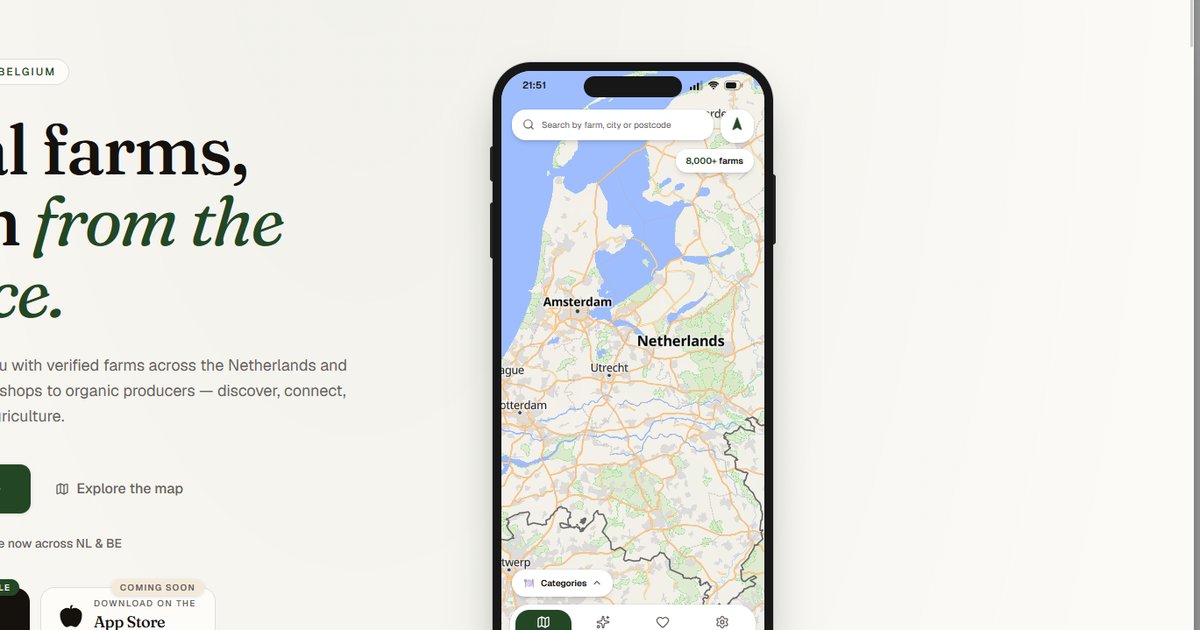
A mobile app development case study from Varix, covering how we extended
an existing web platform into native iOS and Android apps.
The Starting Point
Farmsy's web platform (covered in our Farmsy web platform case
study) proved the core idea worked:
real users, real farms claiming listings, real Premium subscriptions, all
built around map-based discovery of 8,000+ verified farms across the
Netherlands and Belgium. But "find a farm near me right now" is
fundamentally a phone-first moment — someone standing outside deciding
where to go, not sitting at a desktop. The natural next step for this
mobile app development project was native iOS and Android apps.
The Challenge
Going from a web product to native mobile apps is not a simple copy-paste
job. The real risk in a mobile app development project like this is ending
up with two disconnected products — a website and an app that quietly
drift out of sync on farm listings, claim status, or subscription state.
The goal for this build was one product across three surfaces, not three
separate products wearing the same logo.
Building the Native iOS and Android Apps
- A shared data and business-logic layer — farm listings, ownership
claims, and Premium subscription status stay consistent whether a user
is on web, iOS, or Android, all reading from the same source of truth - A native Android app, shipped and live now on Google Play, built
around the same core flows as the web product — map search, farm detail
views, and Premium unlock — so the mobile experience feels native, not
like a wrapped website - An iOS app in active development, following the same shared-
architecture approach so launch is a deployment milestone, not a
from-scratch rebuild - Mobile-specific UX work the web version never needed — location
permission handling, on-the-go map performance tuning, and native app
store subscription handling, distinct from the web's Stripe-based
checkout
Why This Mobile App Development Project Matters
This project is the clearest demonstration of how Varix approaches
multi-surface products in general: build the data and logic layer once,
correctly, and let it power however many front-ends the product actually
needs — instead of treating web development and mobile app development as
separate projects run by separate teams on separate timelines.
The Result
Farmsy is live on Android now via Google Play, with iOS in active
development on the same shared architecture — meaning the eventual App
Store launch adds a surface, not a rebuild. See full project details on our
Farmsy work page.
Thinking About Taking Your Web Product to Mobile?
Already have a web product and thinking about going mobile? Get in touch
with Varix — we're a mobile app
development team that will show you how to do it without duplicating your
entire system.