 Varix
Varix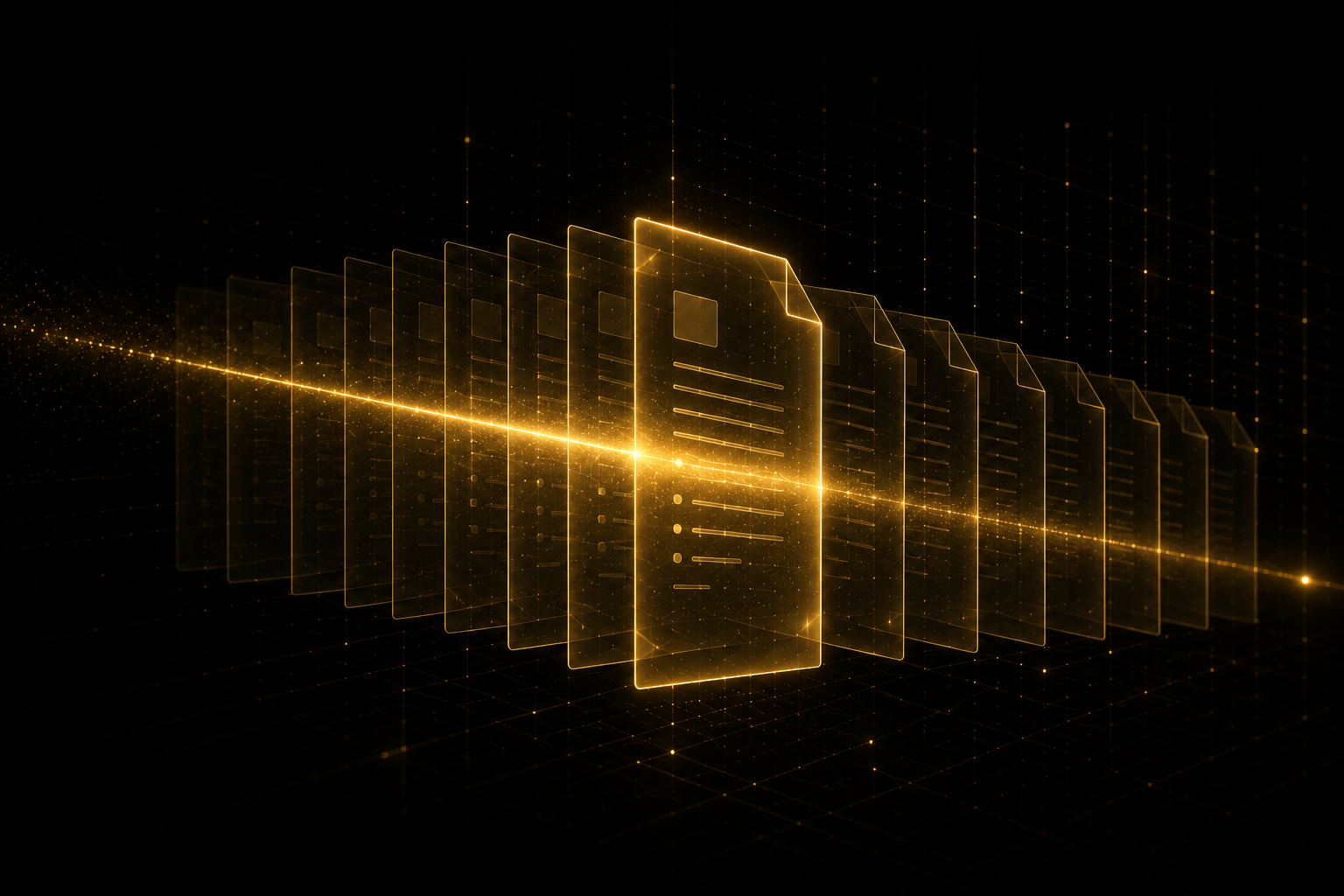
A plain-language explainer on the technique behind Varix's document
intelligence work.
The problem RAG solves
Ask a general AI chatbot a question about your company's own contracts,
policies, or internal reports, and it will either say it doesn't know or —
worse — confidently guess wrong. General AI models are trained on public
internet data; they've never seen your specific documents.
What RAG actually does
RAG (Retrieval-Augmented Generation) fixes this by adding a retrieval step
before the AI generates an answer:
- Your documents are broken into chunks and converted into embeddings
(a searchable numerical representation of meaning, not just keywords) - When someone asks a question, the system retrieves the most relevant
chunks from your actual documents - The AI model generates its answer using those retrieved chunks as
grounding — so the answer is based on your real data, with a citation
trail back to the source
Why "grounded" matters more than "smart"
A RAG system that says "I don't know" when it can't find a source is more
valuable than one that always sounds confident. For business use —
contracts, compliance, internal policy — a wrong-but-confident answer is
worse than no answer.
Where Varix Has Applied This
RAG isn't just theory for us. We've built it for civic-scale data (our
poverty intervention case study,
grounding 37,000+ households' worth of CBMS data) and it's the technical
foundation of Tessora, our
own enterprise document intelligence product. See the different
capability tiers on our RAG & Document Intelligence service
page, or read how to choose
between hybrid search and fully agentic
RAG for your specific use case.
Have Documents an AI Should Actually Understand?
If general-purpose AI tools keep giving you generic or wrong answers about
your own business data, get in touch with Varix — this is
exactly the gap RAG is built to close.